Circling the Truth


A heightened sense of my own mortality is transforming me.  There were triggers from profound experiences in nature—hiking isolated trails in a mountain woods, and paddling a kayak into a primordial mangrove tunnel.  But, if I’m honest with myself, the true root of this change is the recognition that time moves more quickly now.  My awareness of aging brings sharper focus and a new attitude.  I’ve become impatient with the tepid, the half-baked, the insincere.  Conformity bores me.  I lean toward edgy and honest.  I crave full-throttle, all-in reactions to daily life, tempered only by compassion.

At times, I am able to alternate this rebellious passion with a more Zen approach—relaxing into stillness, openness, and playful humor.  Best of all, I’ve given myself permission to roam between these two mindsets.  Each has its own rewards.

As I ponder the passing time, I also wonder about all of us.  Global challenges and nationalist tendencies spark our collective fear and unrest.  Our constant social media connections seem to make us lonelier. We humans are so alike, so needy, and yet so polarized.  We travel varied paths in search of meaning and often come up short.

I am reminded of a lovely Italian phrase, passeggiata, to describe people walking around the town plaza late in the afternoon.  I want to walk there, together with old and new friends, and with perfect strangers—all of us sharing the angled sunlight and shadows, finding peace as night approaches.


circling the truth_email

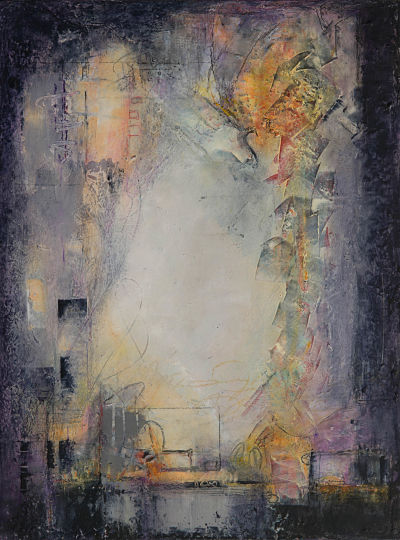
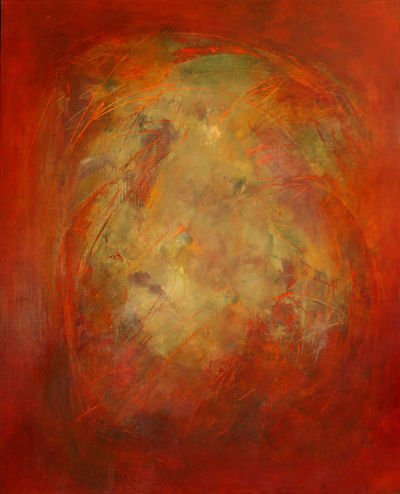
Circling the Truth   (30″ x 24″, Oil, cold wax, pastels on wood panel)

Murmuration


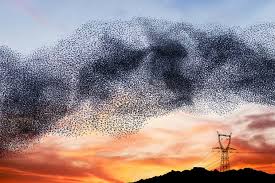
Lately I am fascinated by a phenomenon of nature:  the instantaneous motion of birds in a murmuration.  The flock moves in concert, creating ever-shifting shapes across the sky. These twists and turns are thought to be communal fear reactions to escape a nearby predator—an avian “circling of the wagons.”  When one bird moves, so do its closest neighbors in a reaction time under a tenth of a second.  The connected flock is “a system poised on the brink, capable of near-instantaneous transformation, like an avalanche or a ballet.”  (Dawna Markova & Angie McArthur in Collaborative Intelligence)


image.murmuration.jpeg


And I wonder:  Do human beings react this way?  Do we express our communal fear, anger, horror in a kind of murmuration?  We seem to jump from one fear or outrage to another, provoked by news reports and online posts.  Our social media responses travel near the speed of light and tend to cluster—rather like a flocking behavior.  “Look over HERE!  NO, look over THERE!”   We swoop nervously through clouds of uncertainty, trying to make sense of information which may have serious consequences.  We are continually on edge in these edgy times.

We humans feel our solitude deeply. We float on this planet, shifting with currents of change.  We gather together, drift off on our own, and gather again.  In the experience of profound emotions, we seek out other people to calm and center ourselves within the safety of a larger community. These human murmurations allow us to move forward together, profoundly connected and no longer alone—better able to cope with whatever difficulties lie ahead.

murmuration….

20180227_002v2_lowres_opt.jpg

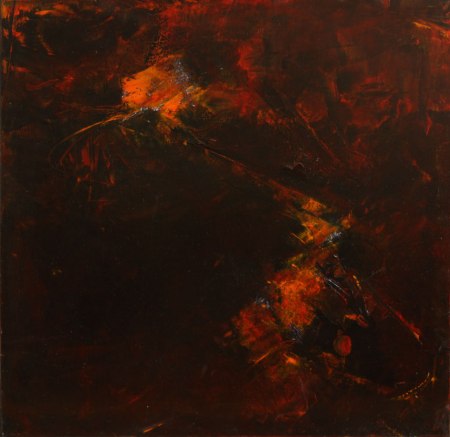
Murmuration, 16″ x 12″ (oil, cold wax, pastels on wood panel

Interview About My Art and Poetry

I am thrilled to have had the opportunity to share my thoughts on art and my creative process in this interview in February, 20217 with Manvi Pant, from her Stargaze/Read to Empower international publication:

Q1:  Do you define ART or does art defines You?

Both seem true to me. I know—deep in my core— that I am an artist.  All my senses, thoughts and experiences go through this creative filter. I am extremely curious and many things resonate with me in the course of a day. It is impossible for me not to make associations between different things. Absolutely, art is a foundation and a structure which defines me. But I also think that how I interpret or define this creative impulse allows me to make art which is specifically mine. I then define ART in a uniquely personal way—in my choice of words, colors, lines, composition and other elements.

An artist is essentially a medium, a conduit to express the underlying dynamics of a culture. As artists, we have our fingers on the collective pulse. I want each of my paintings and poems to capture a state of mind, an idea or experience—to halt it in mid-air so that it resonates in a brief moment of connection with another person. My art becomes both the means and the end.

Q2:  What was the first piece you worked on? Would you like to share any memory attached to it?

My master’s degree and work experience are in public policy. The first art piece I worked on was a collage self-portrait for a mixed media collage class I took in 2001—my very first art class ever! I created it from magazine images and text. I also wrote a poem to accompany the collage. I had been writing poetry and plays for years. But this painting was significant, for I began to recognize a deep pull to become a visual artist.  After this class I went on to discover paints, brushes and canvases. Today I continue to write poetry and paint abstracts in oil mixed with cold wax. My art has been juried into numerous gallery exhibits and even included in a few books. But an entire new world opened for me with that first collage self-portrait. It still hangs in my studio.

Q3:  Any of your favorite collaborations so far?

I have not collaborated on a painting with another creative soul but would love to! My “collaborations” to date have been indirect, when I’ve used a particular musician’s work to inspire me. I have done abstracts to visually interpret certain jazz musicians, and did a painting (“Attraction”) while listening to Bruno Mars. It felt like he was there in the studio with me! A few years ago, I had a poem in an exhibit, “War: Images & Words,” where art and poetry were juxtaposed in a powerful way. It felt like a collaboration after the fact.

Recently I heard about a dance choreographed in response to an artist’s paintings. The dance was performed at the gallery’s exhibit opening.  That struck me as so exciting! I love collaborations across art forms. This “cross-fertilization” enriches the creative experience for both the artists and the audience.

Q4:  As an artist, have you ever struggled to be expressive in your ARTFORM?

There certainly are times where I struggle with a painting. I’ve learned that this usually happens when I am trying to force the painting to move in a particular direction or toward a conclusion I already have in mind.  It’s important to leave the painting alone for a while until I can look at it anew. Sometimes it helps to do something radical to it so I either reconnect to the original impulse or begin to see a new path for the painting.

There also are times when I resist going into my studio and use lots of other activities to procrastinate. I might feel anxious about a new direction for my art, or uncertain how to finish a particular painting. Other times I find that procrastinating serves a purpose. Something is “percolating” just below the surface, and waiting actually helps the creative process.

Every so often a painting or poem seems to create itself, quickly and easily. I am grateful for these rare gifts from the universe!

Q5:  Do you ever fear your own creative genius? What keeps you balanced in life?

I don’t fear my creativity.  For me, it is a wonderful way to explore “hints from the universe,” a term which writer Amy Tan uses in her wonderful Ted Talk on creativity.  Some event or feeling or experience will capture my attention and really resonate with me.  A painting or poem becomes the expression of my exploration into what specifically is resonating, why, and why now.  The deeper I dig, the clearer my intention becomes and the more confident I am that my art will convey this intention.

What keeps me balanced?  Walks in a nearby forest, swimming, music, laughter, meditation. Being quiet, and fully in the moment, is wonderful.  Experiencing the art of others—in museums, galleries, novels, poems, plays, dance— always nurtures my soul. Recently, I became a fan of gong meditations!  All those sound frequencies seem to reach every cell of my body to energize and balance at the same time.

Q6:  How do you choose your colors? Which one’s your favorite?

Color has its own language. Each one has particular emotions and connotations attached, in every culture. So, while I choose my colors intuitively, I understand that my subconscious is at work, and the colors reflect my mood or intention in some way. When I begin a painting, I almost never have a palette in mind. I start by making random black lines and shapes on a wood panel. I then bring in a color and its complement. At the moment, my favorites are perylene red—a rich bright red— and perylene green—a darker forest green.  Both are transparent and create the most wonderful values.   I think it no accident that I have stayed with these dramatic colors for a while. Given the polarized state of our national politics here in the USA, soft pastel shades just don’t seem right to me these days.

Q7:  You are also a poet. How do you connect ART and Poetry?

I’ve written and published poetry over the years but it wasn’t until 2013 that I discovered how to incorporate it into my visual art. I began a painting series inspired by a trip to Florida’s Gulf Coast. I was profoundly moved by an ocean kayak experience and turned to poetry to explore the meaning behind the sense memory I had. In the days that followed, I moved back and forth between the paintings and drafts of the poems. As the poems evolved, so did the series. I found that writing helped me to find the emotional truth behind my creative impulse for both. The paintings became richer and the process more spontaneous. I could forget my left brain and just paint. I still work this way. By giving poetry an active role, I can move deeper into what I want to communicate through my art. I am enriched by a dynamic synergy between image and metaphor. Creative insights come more easily, and I find that my voice is clearer and more authentic in both art forms.

Q8:  A piece you are currently working on…?

I just finished a painting called “Political Circus” and another called “Information Overload.” I’m now working on a triptych—a set of three 24” x 24” wood panels which will become one painting. The palette is very different for me, with turquoise, olive green, gold and burgundy. I have lots of odd shapes and meandering lines. Only one of the three is close to being finished and I have no idea yet how to tie all three together in a meaningful way. It shall unfold in time…

I also am working on a book of poems, another book which combines my art and poetry, and a possible manual for artists on writing an artist statement.

Q9:  What would this world be without artists?

I cannot imagine. Given the drawings on ancient cave walls, it seems clear that humans need to express themselves creatively in order to record their perceptions and make sense of the world around them. I truly believe that the urge to create comes soon after our basic needs for food, water, and shelter are satisfied.  Artists, writers, musicians, actors and dancers help their communities to understand the truth of experiences and events in deeper ways. They bring clarity and comfort to others, in affirming that we are not alone in our thoughts and feelings.  There is a wonderful quote from the film, “Genius,” which I love: “…back in the caveman days our ancestors would huddle around the fire at night and the wolves would be howling in the dark, just beyond the light. And one person would start talking and he would tell a story…so we wouldn’t be so scared in the dark.”  Artists strengthen their communities and enrich the world—through stories and other creative acts—by affirming our shared humanity.

Q10:  Where do you find your inspiration?

There are moments in nature which are profound for me:   standing beside a body of water, walking in a forest, watching a sunset, hiking in the mountains, gathering shells and ancient rocks on a beach.  When I am quiet and fully inside these moments, I feel such wonder and a powerful sense of connection to all life forms. The wood sculptor Emilie Brzezinski spoke of the forest as “a mystery, a solace, a haven where beauty, life and death intermingle.” I think this is true for much in nature and it inspires me.

I also find inspiration through music, strong emotions and states of mind, science and even political/cultural phenomena. I love rhythms, motion, energy and wave frequencies. I am very interested in patterns—natural or manmade—and boundaries which seem to dissolve. I am curious about what is inside the “space between” people and things. Most of all, I am deeply fascinated by the fact that all life is in motion and connected at an atomic level. There is something wonderful about this essential inter-connectedness which I need to explore on many levels.
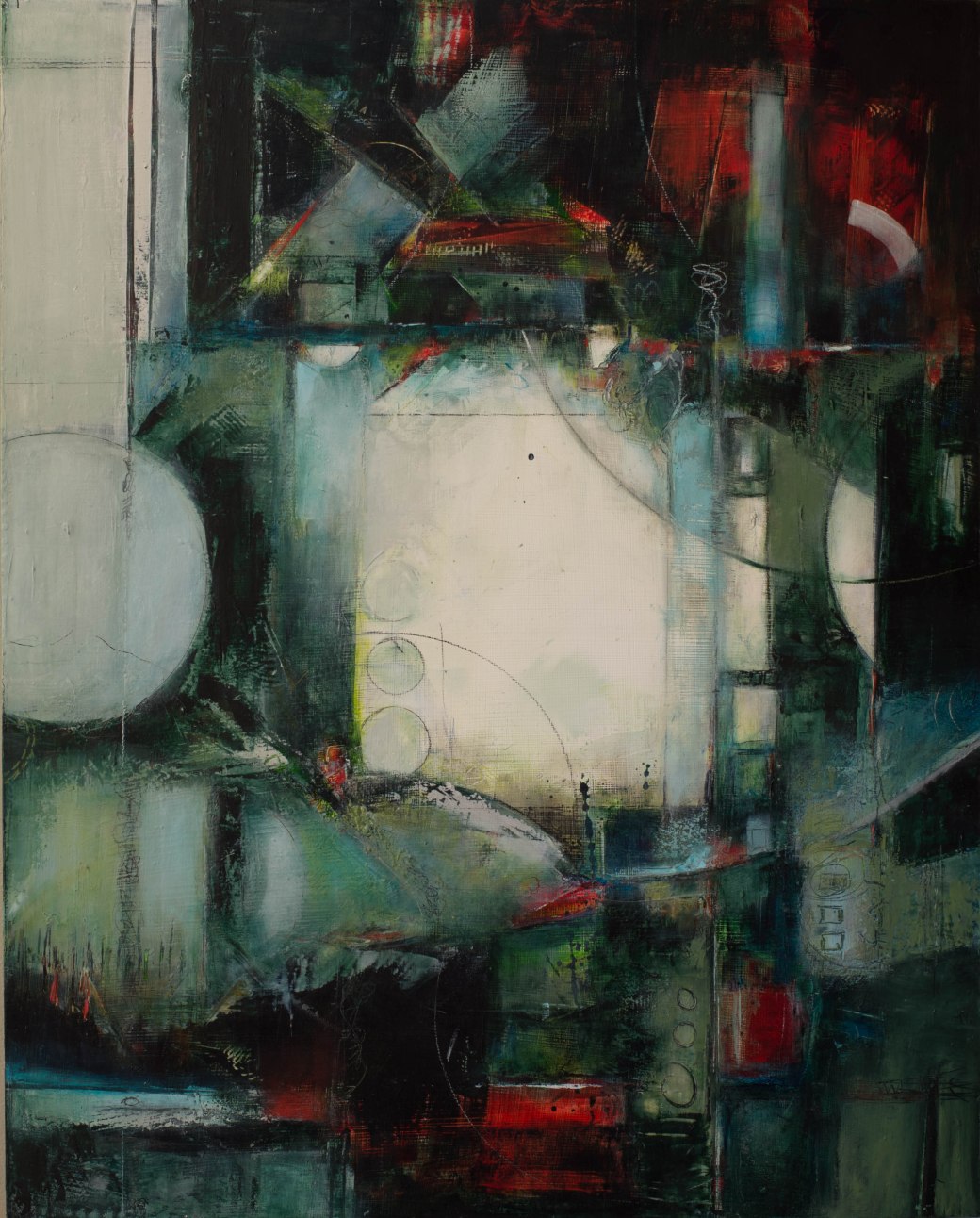
Political Pulls

During this 2016 campaign season, political rants move from one extreme to another, fueled by constant media attention. Like many Americans who want to stay informed, I feel the contagion and the dilemma:   to tune in or not!

I’m reminded of a wonderful Ted Talk on creativity, given by novelist Amy Tan.  In it she says,  “There is no certainty, never complete answers.  You become aware of hints from the universe.  These become the focus.”

As an artist I explore pulses which resonate, whether from within or from what’s happening around me. Today I hear voices in the universe shouting. So I guess it’s no accident that my current art reflects opposite moods. On one hand, I crave boldness, dramatic color, and random lines. I paint quickly, tapping into an energy that wants to leave the painting completely. Unusual shapes arrive out of nowhere. Rules of composition beg to be broken. It is not a boring process.

 “Opening Night” (oil, cold wax, charcoal, marble dust on paper)

On the other hand, my soul yearns for stillness and quiet meditation. I want a respite from the noisy energies around me. I am painting over old work which no longer speaks to me. I may scrape here and there to reveal a bit of the history underneath. But the top layers are mostly quiet and reflective, with pastel colors, lots of negative space, and soft lines.

      “Morning Meditation” (oil, cold wax, collage, marble dust on wood panel)
At the moment, I cannot choose between these two creative impulses. Both are triggered daily, and compromise eludes me. Both pulls seem necessary to some forward movement I do not yet understand. But I trust that I am not alone in trying to make sense of our intense political scene as we head toward November’s election. Until then, I’ll tune in and out, breathe deeply, take long walks in a nearby forest, and paint on.


Hands On


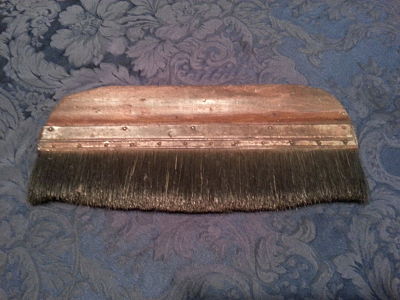
Last October I bought a 70-year-old wallpaper brush, with an oak handle, old tin, and bristles worn into a wavy edge.  I love its age and imperfections.  And its size is great for painting large art panels.  My whole body gets into the act as it travels the surface.


wallpaper brush_opt


This is the second antique brush I’ve bought in recent months, and I realize there are reasons behind this impulse.

Full disclosure #1:  My current focus on hands no doubt can be traced to a recent (and fortunately minor) fracture of my left hand at the base of a finger.  I have gained new respect for all our hands do for us— how very important it is to grasp and to hold.

Full disclosure #2:  My mother turned her hobby into an antique business in her later life.  She found beauty in common objects, especially those forged, whittled and sewn by hand.  She loved to learn about their cultural and industrial contexts.  Her birthday is just around the corner.  I miss her, and thank her for sharing her deep appreciation of human history and artifacts.

Like her, I find wonder in an object created or used by another’s hands.  I’m drawn to ceramic bowls, cups, pitchers.  I want to touch every wood, metal or stone sculpture I’ve encountered.  I love to run my fingers across fabrics of wearable art and old quilts.

This strikes me as more than an appreciation of the work of artisans and more than a well-developed kinesthetic sense.  Touching something others have touched brings a reminder of continuity and connection.  Other fingers were here.  Another life touches my own.   Our histories merge across time.

Today, I paint with an old brush.  As I hold it I sense the stories of others.  What were they thinking as they used it, I wonder?  Where did they live?  What kind of lives did they lead? Others join me in my studio, and open me to new creative energies.  And I am grateful for the company.

Across Time and Space_opt

Across Time and Space (30″ x 30″ Oil with cold wax, marble dust, pastels)


Writing on Water

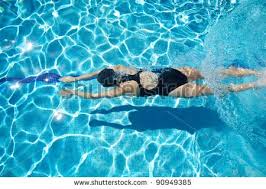
During these warm September days I am grateful for an outside pool to swim laps. With the flow of water and the warmth of the sun on my skin, swimming becomes a meditation.  My mind’s chatter fades.  I am inside a rhythm, turning from side to side, reaching with long arms, taking a quick full breath.  A wavy pattern of sunlight reflects on the bottom of the pool. Edges of light vibrate and dance below me.  I am fully in the moment. There is music here, and poetry.

swimming_1

The centered, peaceful energy I find in water is the same state I try to reach when I paint. Like other artists, I know when I’m in this zone.  The process is more spontaneous, fueled by a passion that is quiet and true.  I return to the rhythm and flow of swimming, sensing an undulating line—like the upbeat and downbeat of a conductor’s baton, like a wave writing on water.  Inside that motion I connect differently to time and space, to my essential self, and to something much more profound.

I’ve learned to take a few moments when I enter my studio to swim into the room, leaning into the creative current and letting it take me where it will.

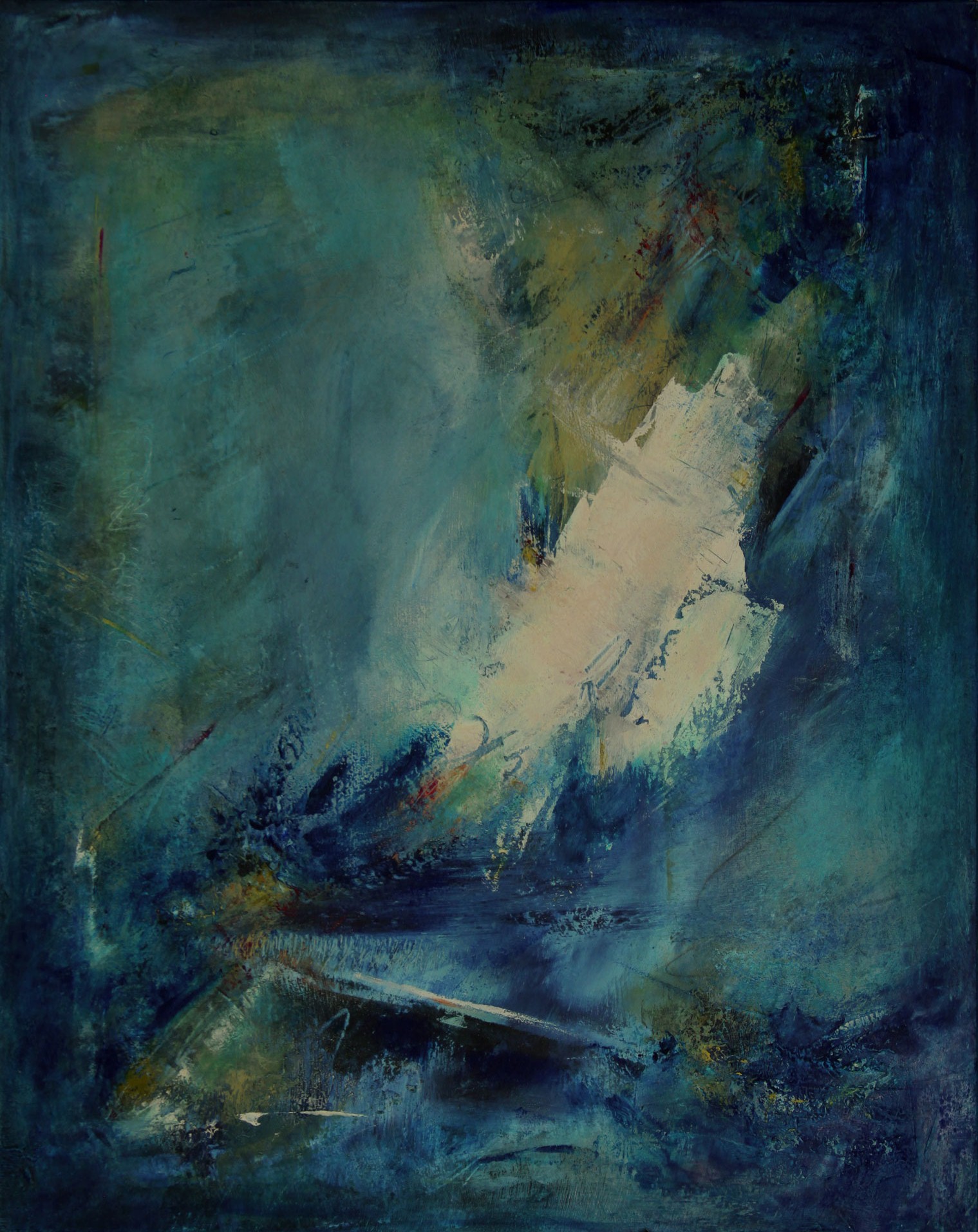
Leaning In  (16″ x 16″ oil with cold wax)

Sotto Voce

I awake earlier these days, somewhere between 4:30 and 5:30 AM—-hours I saw in my youth only from the other side, after very late night adventures. Perhaps it is a function of getting older. Maybe my unconscious self understands that time is more precious and I shouldn’t waste a moment more in sleep.  I used to refer to these as “the Stephen King hours” when little gray anxieties arrive to torment and refuse to leave. But I’m changing my attitude.  Surely there is a silver lining here in the dark.

Old:  My mind starts abruptly and I begin to ruminate over errands to do, people to contact, art in progress.

New:  Instead of trying to quiet my mind’s chatter, I get out of bed.  I focus on the quiet peace in the house and the absence of morning traffic sounds.  I listen closely to the silence and savor the pale gray hint of daylight in the sky. I think of walking in the mountain woods on a cool summer morning. This is a time for reflection—universally understood and worthy of respect.

I head downstairs to my studio, curious to see what I might paint in these peaceful hours.  It could be a revelation.

Sotto Voce 24

Sotto Voce
24″ x 24″
Oil, cold wax, pastel, marble dust on wood panel

http://www.cynthiajlee.com/

Unknown Territory

It strikes me as no accident that I am re-watching a particular film lately.  It’s a documentary about the musicians who collaborated on “Lost On The River:  The New Basement Tapes.”  Each worked on composing his or her own music for early Bob Dylan lyrics.  All added their ideas, voices and instruments to the songs composed by others.  Pressure was high.  The lyrics were written by a legend, and they had only a week to produce a finished album.

What fascinates—and reassures—me is their honesty in confronting their fears about the music they were creating. Watching the film, I commiserate with their stops and starts, and their anxieties, large and small. I celebrate their breakthroughs and their joy when they connect to one another through the music.

As I move in a new direction with my  own art—toward the bolder and “edgier”—I am nervous about the art I am pulled to make at this particular time.  It’s scary, but a good scary. I am not sure I can pull it off, but must try.

Ian Roberts in his fine book, Creative Authenticity, says this:  “The wonderful and terrifying truth is that expression of your authentic voice takes courage—courage to face the fear of failure, ridicule and incompetence.”

I take comfort in this, and in the work of other artists who bare their souls, hope for the best, and move forward once again into unknown territory.

Jumping In

“Jumping In”

(16″ x 12″, Oil, cold wax, pastels on wood panel)

http://www.cynthiajlee.com

Mythology: Poem and Painting

I find the myths and folklore of other cultures very fascinating. There are so many common themes in our universal human journey to understand ourselves and our world.

Last year I was inspired to do a series of paintings based on hiking in the Smoky Mountain woods near Asheville, North Carolina.  As part of my process, I researched the Native American tribes who inhabited the region thousands of years ago. Their rich mythology and cultural symbols resonated deeply for me, and found their way into an original poem and an abstract painting.  I’ve shared both below:


Mythology (18″ x 18″, Oil with Mixed Media)

CJL_Mythology_2


Mythology

In these mountains, six thousand years ago,
ancestors told stories of a cosmos divided
into layers:

an upper celestial world of weather and objects
of light in the sky; a middle natural world with
flora and footed creatures; and a lower world,
dark and dangerous, filled with strange beings
who could travel the three worlds at will,
crisscrossing permeable borders
in a layered universe.

Their ancestral themes remain intact,
channeled into the present under new names,
like multiple universes, where we move across
dimensions on a space-time continuum, and
we (like those before us) try to make sense
of dense black holes with string theories,
yearning to understand, while our souls
(like theirs) glide across time, untethered

  —Cynthia J. Lee

ARTIST AS MEDIUM

Last autumn during the week of my son’s wedding on the East Coast, I had the opportunity to see Rothko to Richter: Mark-Making in Abstract Painting at the Princeton Art Museum. In the exhibit book are statements by two artists about their intentions for the art they created:
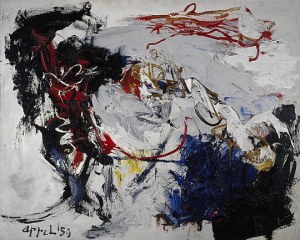
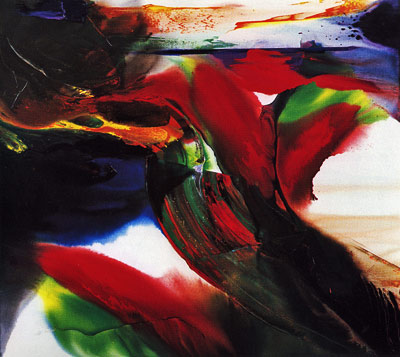
Karel Appel (1921-2006): “We live always in tremendous chaos, and who can make chaos positive anymore? Only the artist.”

karel-appel-Dance-in-Space-before-the-StormKarel Appel:  Dance in Space Before the Storm
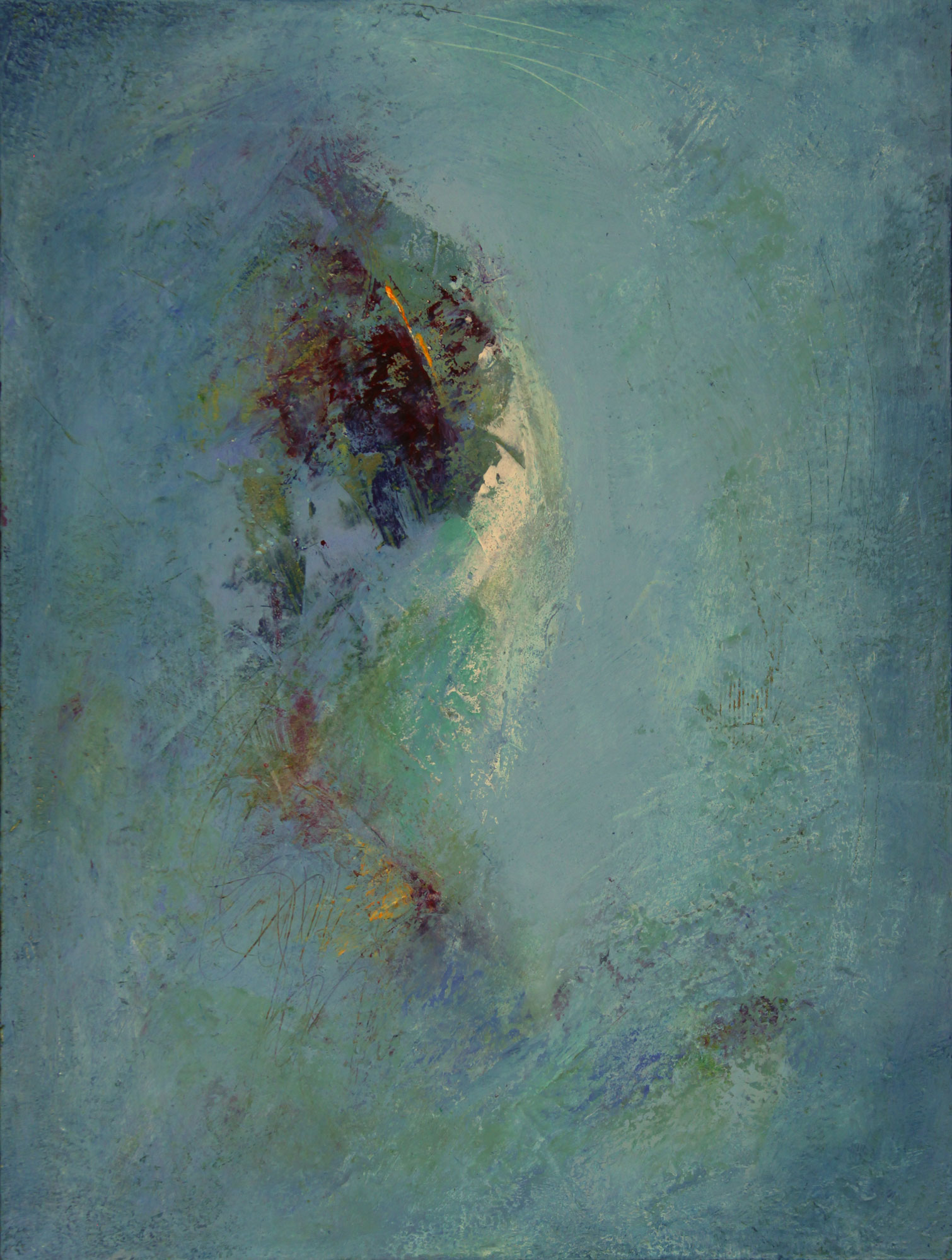
Paul Jenkins (1923-2012): “The role of the artist is to serve as conduit, or ‘medium’, through which memories, emotions and experiences pass directly onto the canvas.”

1992ENDLESSQUEST Paul Jenkins:  Phenomena Endless Quest

Like other Abstract Expressionists, Appel and Jenkins were influenced by the massive cultural, political and technological changes following World War II.  Today’s artists, too, respond to the pulse of the times in which we live.  At exhibits of contemporary artists from around the world I often find similar themes reflected in the art.  Forms are incomplete.  Shapes dissolve.  Layers of complexity are punctuated with random lines and scratches.  All these seem to suggest the fragmentation and uncertainty of our globally-connected Digital Age.

Artists are always engaged in a search for meaning about the world around us.  Those who experience our art know when the art is good, for it resonates.  Others can see and feel something of their own lives in the art.

For me, the role of artist as “medium” is both challenging and deeply rewarding.  I begin a painting to explore some undefined question, some feeling I don’t yet understand.  Eventually, the painting reaches a “There, that’s it!“ point where both question and answer are present.  It says what I wanted to say and communicates what I felt.  Later, when the painting resonates for another person, I realize I was not alone in this exploration.  For a brief moment in time my art connects us and, together, we make some sense of our world.

Story Unfolding_emailCynthia J. Lee:  Story Unfolding, Oil with Mixed Media